
A letter collection for parents and guardians
Letters to my child at 18: a little of each year, saved for later
Start with one dated letter about an ordinary day, one thing you have noticed about your child, and something you hope they know when they are older. Save an independent copy. Repeat when you have something to say: a yearly birthday note is a manageable starting point.
This guide helps you build a collection over time. If you need a complete letter for an approaching birthday, go to the 18th birthday sample letters and messages.
By Reanimation Lab · Updated
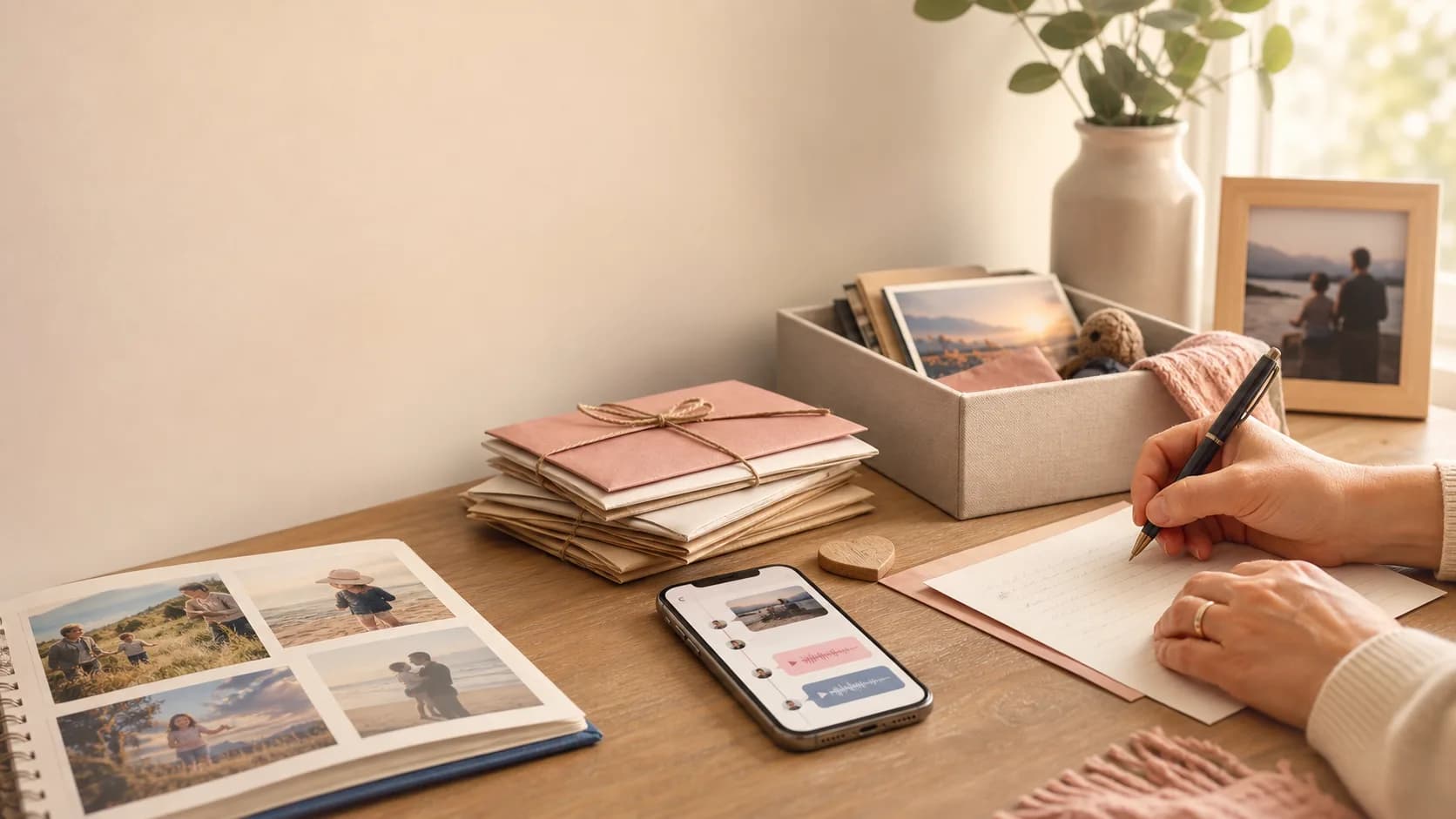
A repeatable letter you can finish in one sitting
- Place the reader in the day. Write the date, your child’s age, where you are, and something happening around you. A birthday is useful, but an ordinary Tuesday is enough.
- Describe a scene. Include what someone said or did. “You spent ten minutes showing your cousin how the puzzle worked” tells them more than “you are patient.”
- Leave one piece of context. Explain a family nickname, a tradition, or why a particular person appears in a photograph.
- Offer one honest thought. Write something you are learning as a parent, an apology you can make without asking them to comfort you, or a hope that leaves room for their own choices.
- Sign, save, and label it. Add your relationship and a note such as “Written at age six; intended for your 18th birthday.” Keep the original outside any keepsake service.
A missed year does not ruin the collection. Write a note about the gap if it matters, then begin with the day you actually remember. Do not invent childhood quotations to make the timeline look complete.
An ordinary-day letter example
This original example is fictional. It shows a short entry in a collection, rather than a speech for the final birthday.
Dear Ellis,
You are seven today. It is raining, and your socks are drying on the radiator after you tested every puddle between school and home. At dinner you asked whether the moon looks the same from your cousin’s house. We found the answer together, then you asked three more questions I could not answer.
I want to remember that you are not embarrassed to be curious. I am learning to say “I do not know” instead of inventing an answer just because I am the grown-up.
I have saved a picture of our kitchen table. The little wooden boat in the corner was made by your great-aunt Jo. She taught me to mend things before replacing them, which is why there are always tools in that drawer.
When you read these letters at 18, I hope you still have questions you are happy to ask. I hope I am still making time to hear them.
Love,
Mama
Your seventh birthday
Prompts that change as your child grows
Baby and toddler years
What does a normal morning look like? Which song settles them? Who has been helping your family, and what would you like your child to know about that person? Record a sound or gesture as well as a milestone.
Early school years
What question did they ask this week? Describe a game they invented, a walk you take together, or something they kept practicing. Quote their exact words only when you remember them; otherwise say you are paraphrasing.
The middle years
What did they teach you? Describe a choice they made, a project they cared about, or how a familiar family ritual is changing. Ask before saving a story that might feel embarrassing later.
Teenage years
Where have you seen their judgment grow? What have you changed your mind about after listening to them? Offer support without deciding what college, work, friendships, or relationships should look like.
Use the same approach for a son, daughter, or a child whose identity is changing: write to the person you know. Avoid treating marriage, university, parenthood, or a particular career as the required ending.
Make a first-birthday starting set
If you are beginning in the first year, pair your letter with one photo of home, a short recording of you speaking to your baby, and a note naming the people who helped care for them. Describe the day from an adult’s perspective; there is no need to pretend you know what the baby was thinking.
Ask grandparents for a family story and friends for how they know your family. The baby shower and first-birthday message guide includes a ready-to-send request and guest examples. Keep a separate note of which recordings are intended only for your child.
Organize the years so the collection makes sense at 18
Use one folder per year or birthday. For example, age-07/letter-from-mama.txt can sit beside the original photo and recording. Add a contents note that names the writer, the approximate date, and why each item belongs. Keep uncertain dates marked as approximate.
Save the text as well as a scan of a handwritten letter. A scan preserves handwriting; the text makes reading easier and gives you another usable format. Record a spoken introduction if you want your child to hear how a nickname or family name sounds.
For sound files, the Library of Congress recommends descriptive labels, separate copies, and annual playback checks. Keep those checks on your own calendar; do not rely on a future email as the only reminder that the collection exists.
Choose a reveal and a realistic storage plan
Reanimation Lab supports written messages, photos, voice notes, and videos. Choose a scheduled time capsule for a future birthday, or an instant QR keepsake if your child should open the collection as soon as you give it to them. The digital time capsule explainer covers the recipient experience.
The Free plan lasts 14 days from creation. It is not storage until a child turns 18, even when you choose a distant unlock date. Paid plans provide ongoing hosting under the current service; no plan is a promise of permanent storage. Check current pricing and contribution limits before planning a long-term gift.
Keep the growing archive in your own backed-up folders, and assemble the keepsake at the stage that suits your family. Contribution windows and sealed-message rules apply in the product: do not assume a published capsule stays editable for eighteen years.
For personal family material, keep the capsule private and review the selected viewers and contributors. A QR code carries a destination, not authentication. Test access as a recipient and keep letters intended for one person separate from any group reveal. Read the privacy policy before uploading sensitive information.
Hand over the story as well as the link
Give your child a short contents page, the intended opening date, and a way to find the independent copies. Let them choose whether to read alone or with you. They may want to open only a few letters at first; the collection does not need to become a public birthday performance.
If you want a physical card, follow the QR birthday card printing and scanning guide. Print a readable explanation beside the code so the card still makes sense before anyone scans it.
Begin with today’s letter
Use the free letter worksheet to write, copy, or print a draft without signing in. When you are ready to assemble the gift, add your letter and selected media in the builder.